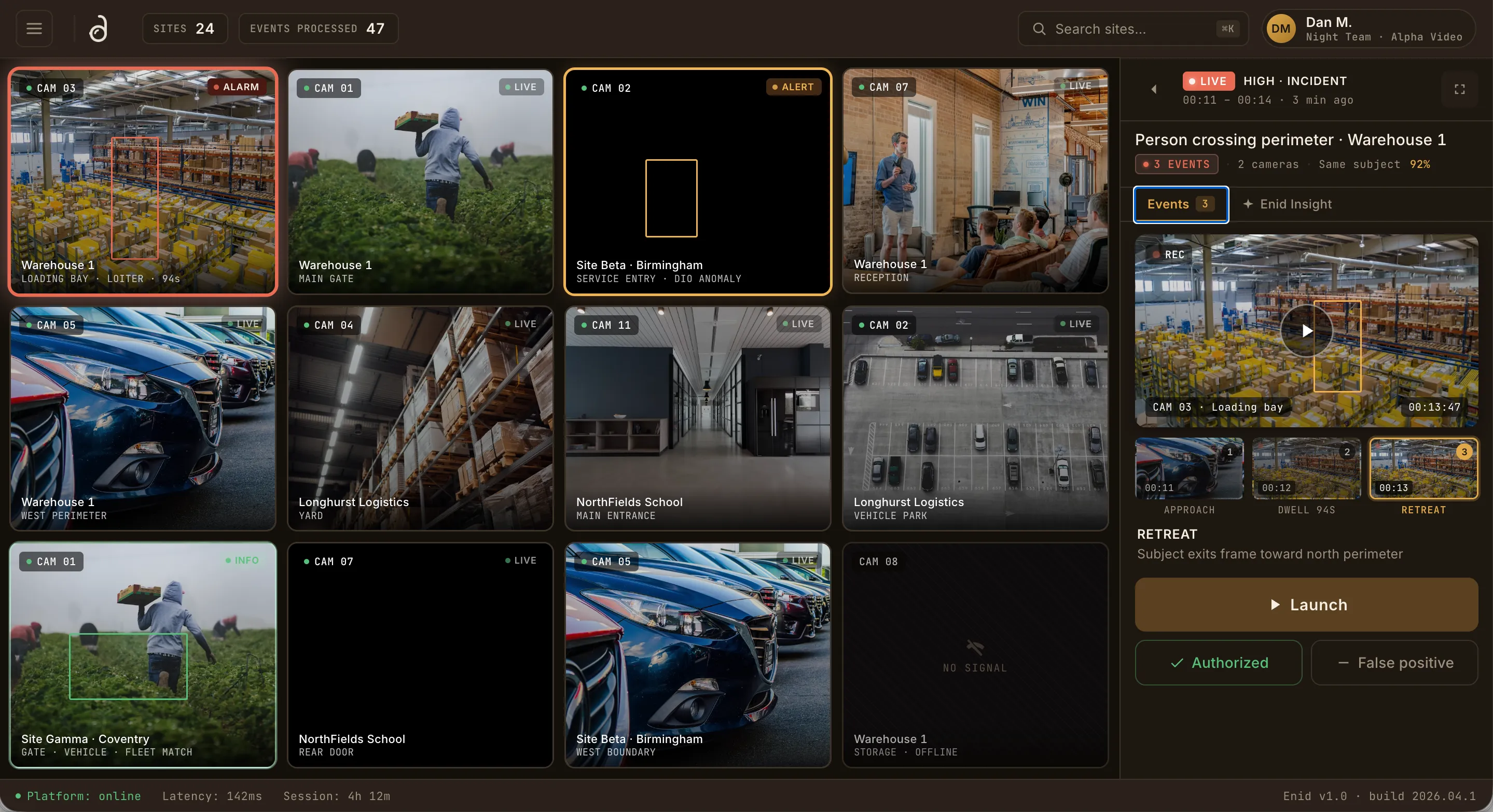
Enid is an end-to-end platform designed for operator efficiency and customer satisfaction. Cloud Hub filters events at the edge, operators work each one with the site's context already on screen, and the people who own the site see what happened — and what was done about it — in their app.
Traditional systems make every viewer pull its own stream across the site's uplink, so bandwidth multiplies with every operator you add. Enid inverts that. Each site publishes a single stream to the cloud, and the cloud fans it out to as many operators as you like — edge bandwidth stays flat whether one person is watching or fifty.
Edge
On-site device records locally and runs real-time AI on every camera.
Cloud
Single ingest, unlimited fan-out, deep AI, and secure storage.
Browser
Operators and owners view and act from any device, no install.
What makes Enid different.
Flat-bandwidth fan-out
One publish per site, unlimited viewers. Your uplink cost doesn't grow with your operations team.
Hot streams
The instant an event fires, Enid pre-warms the high-res stream so it's ready before the operator clicks. Sub-second to glass on the moments that matter — no cold-connection wait.
High-accuracy edge AI
Person, vehicle and unknown, classified on the device before an alarm ever reaches a screen. Over 90% fewer false positives than raw motion.
Anti-shake stabilization
Wind, traffic and pole vibration make cameras wobble — and make a static scene look like motion to lesser systems. Enid stabilizes the image so stationary objects stay stationary, killing the false alarms that plague outdoor and trailer sites.
Cloud AI on full history
Run today's model over last quarter's footage, and upgrade or swap models centrally without touching a single edge device.
Browser-only operations
A full video wall in a browser tab. No client to install, on any device — even a tablet.
Always-on resilience
Multi-region architecture rides through an outage in under a minute, and every site keeps recording locally even if the internet drops.
Evidence you can defend
Encrypted transport and tamper-evident clips give you a clean chain of custody for police and insurers.
The hardware
One device. Any site.
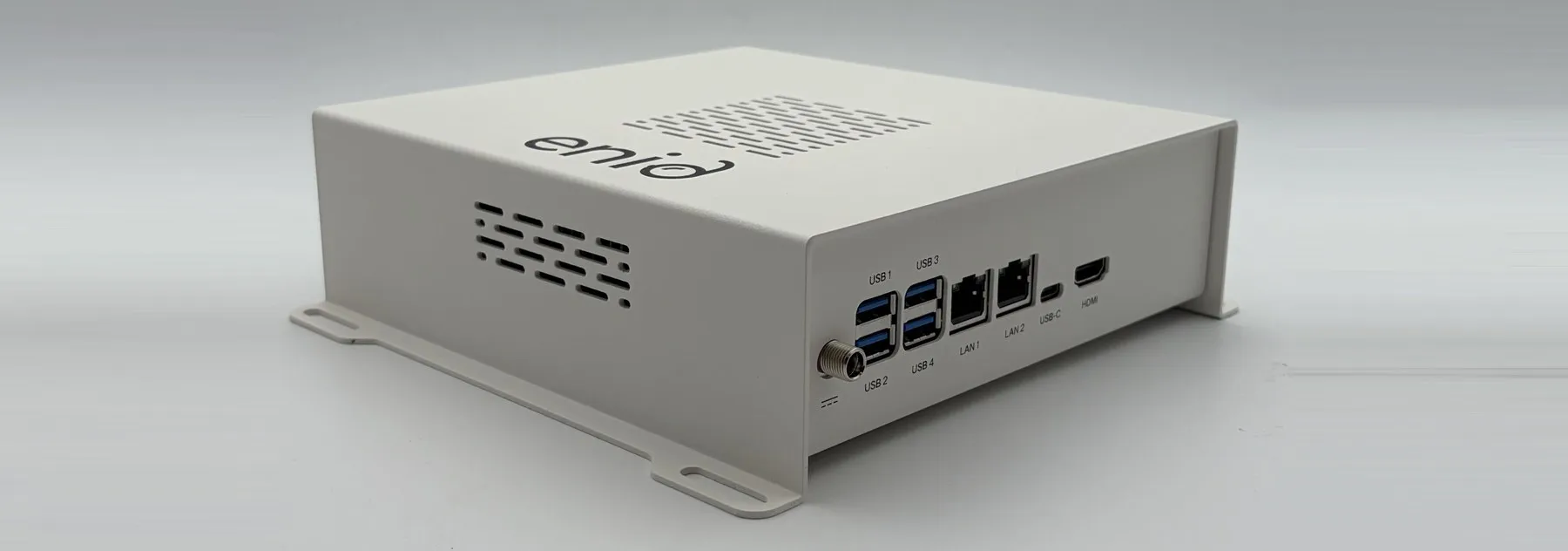
Every Enid site runs on Cloud Hub. Every camera connects to it; it records, runs AI on every stream, and decides what deserves a person — on site, in real time, whether the internet is up or not. A plant room, an office, a pole or a trailer: same box, same platform.
64
cameras on one device
Standard ONVIF / RTSP — including the cameras already on the wall. One device per site, not a rack.
1–8TB
stored on site
Footage is written locally as it happens. 1TB covers a full day if the line drops; sites that keep video locally scale to 8TB.
−40° to 70°C
operating range
A filtered fan and a sealed chassis, rated for where cameras live — not where servers do.
It goes where the cameras go.
Brackets on both ends, a single DC feed and two network ports — one for the cameras, one for the site uplink. Mount it, point the cameras at it, and the site is live.
Plant rooms, cabinets and comms racks
Offices and back-of-house, out of sight
Poles, rooftops and perimeters
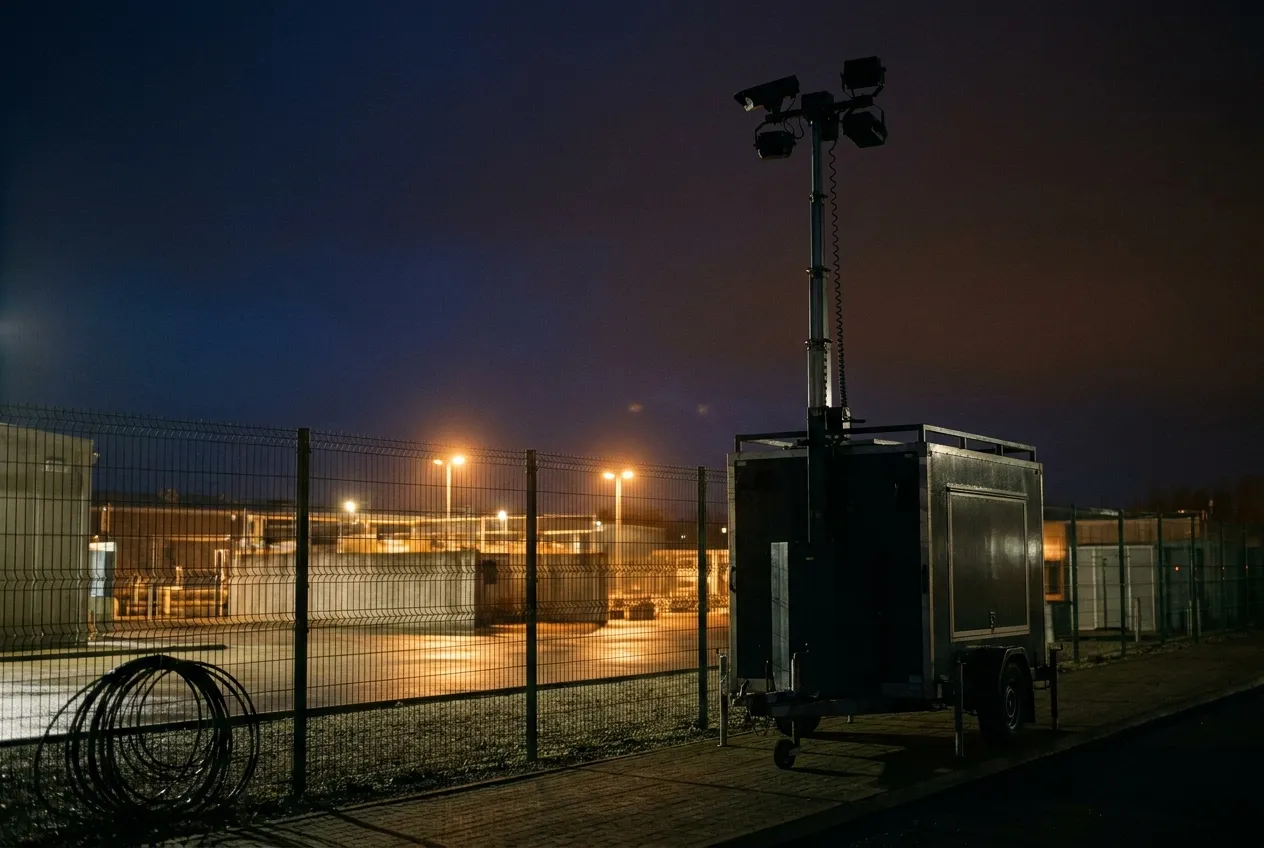
Trailers and temporary compounds — a low enough draw for solar and battery
Decides before it sends
AI runs on every stream on the device itself, so bandwidth, cloud cost and operator time are spent on real events.
Hardened, not just sealed
Secure boot with our own keys, signed images, no shell, no default credentials, no open services. Updates verify before they switch and roll back on failure.
Managed from anywhere
Health, storage, firmware and cameras are visible remotely. A failed update or a full disk isn't a site visit. 12 months support included.
Up to 64 ONVIF / RTSP cameras, licensed per camera · 1TB to 8TB internal · On-device AI on every stream · 2× Ethernet · 4× USB · USB-C · HDMI · Low-power DC input · Filtered fan, −40° to 70°C · Secure boot, signed images, SBOM per release · Built to the EU Cyber Resilience Act · Wall, pole and cabinet mounting · NDAA §889 compliant
Specifications are subject to change before general availability.
In offices, retail and plant rooms, Cloud Hub connects up to 64 of the ONVIF/RTSP cameras you already have and records on site as it happens, so only events need to reach an operator. It arms on a schedule or straight off the building's alarm panel, and mounts out of sight in a cabinet or comms rack alongside the existing kit — no rip-and-replace.
Up to 64 existing cameras, no hardware swap
Records on site — a full day of cover if the line drops
Arms by schedule or alarm-panel state
Mounts in a cabinet, comms rack or back-of-house
Cloud Hub · trailers & remote sites
Deployment for trailers & remote sites
Mobile CCTV trailers, construction compounds and unpowered perimeters need hardware that survives the weather and lives within a tight power budget. The same Cloud Hub runs from −40°C to +70°C on a low enough draw for a trailer's solar and battery, bolts to the trailer frame or a pole, and keeps recording on site when the uplink drops. And because trailers and poles move in the wind, Enid's anti-shake stabilization stops the AI mistaking a swaying scene for an intruder — the single biggest false-alarm killer in outdoor monitoring.
Sealed −40°C to +70°C chassis, low-power DC input
Mounts to a trailer frame, pole or cabinet back-plate
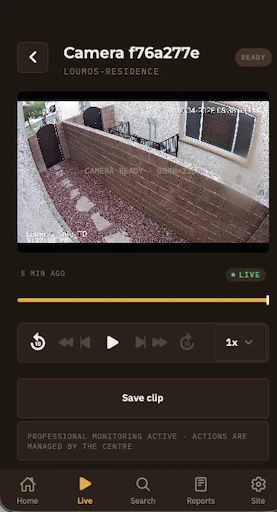
The people who own the site don't want a VMS — they want to know what happened and what was done about it. The Enid app leads with events, not a camera grid: verified incidents arrive as a push notification, monitoring reports land in the app, and owners can tell operators what to watch for — or export a report with its clips for police or insurers.
Event-first feed, no training needed
Verified incident reports from the monitoring center
Tell operators what to watch for, or to expect a visitor
Live view on mobile and web
Export reports with their clips for police or insurers